
· Guide ·  Rali · 5 min read
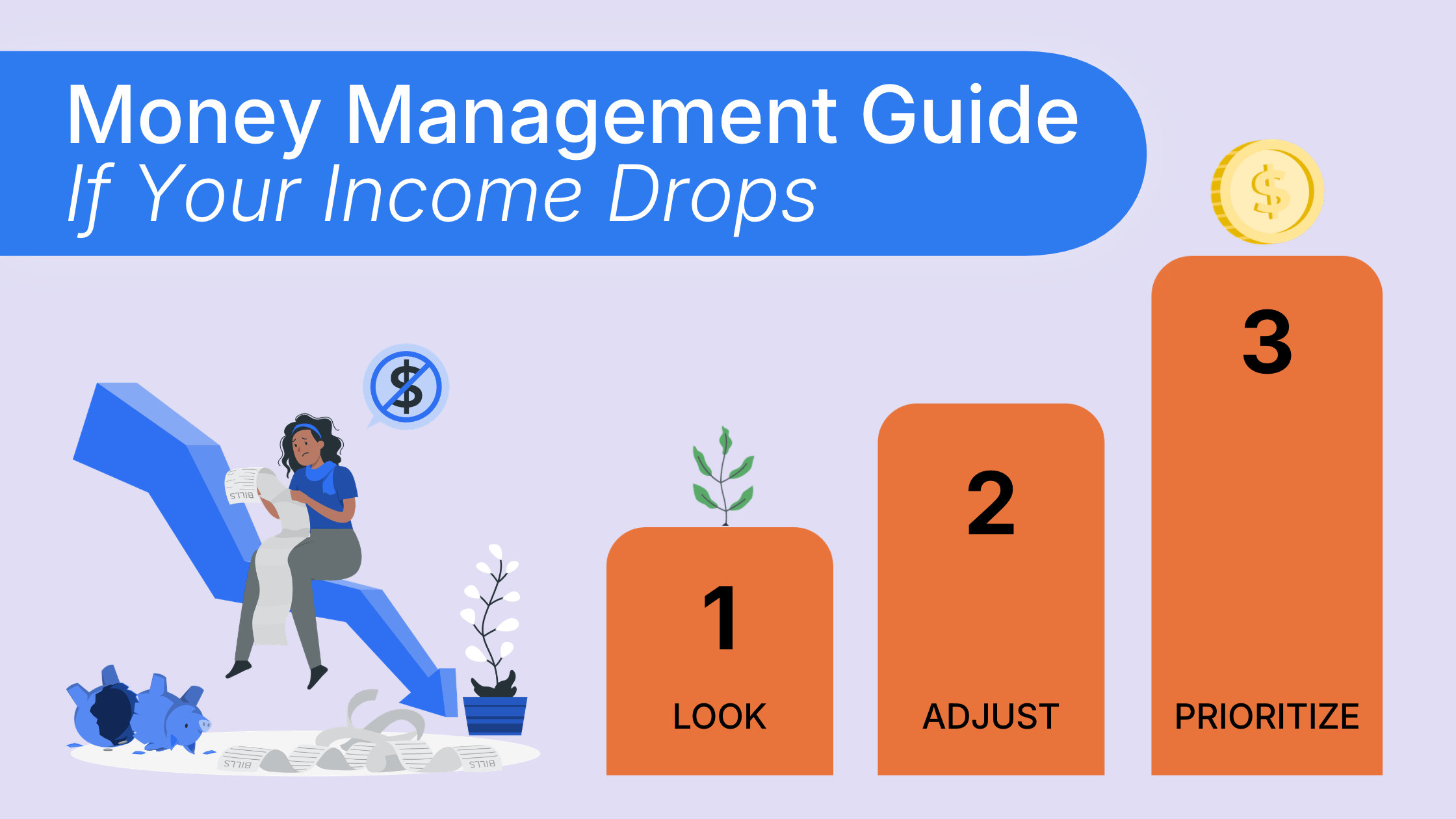
Money Management Guide If Your Income Drops
Practical steps to face the life changes without worry
Losing a job, taking parental leave, or dealing with health issues can change how much money your household has to work with. Your usual budget may no longer work as it did before.
The good thing is that when you understand what you have coming in, what needs to go out, and what you can adjust, you’ll be much less stressed about getting through it.
Whether you faced such events recently or you just want to be prepared in case it happens, here are three practical steps to help you adapt your budget to your new situation, whether you’re facing a temporary setback or preparing for an uncertain period:
Step 1: Look at your spending (yes, all of it)
Sit and go through every line of your usual budget. No budget yet? That’s okay. Write down what you spent last month, using your bank statement. Our free Monnetta spreadsheet adds it all up for you, if you’d like a head start.
Now sort your expenses into two groups:
- Needs: essentials such as rent or mortgage payments, groceries, utilities, insurance, and transport to work.
- Wants: things you like to have, like hobbies, dining out, subscriptions, entertainment.
Start by trimming your Wants as much as you can for now. What else can you reduce or pause until your income recovers?
Don’t skip this step even if the numbers look scary. Knowing what you’re working with almost always gives you a much better starting point than guessing.
Step 2: Adjust your income
Your old income is no longer the real one, so take it out of the plan. Put in the new, lower amount instead. That includes any unemployment or parental benefits. The rules depend on where you live, so check your government’s website or ask your employer’s HR team what you’re entitled to.
If your new income doesn’t cover your spending after the cuts you made in Step 1, the difference is your monthly shortfall. This is where your Emergency Fund can help. And that’s exactly what it was built for.
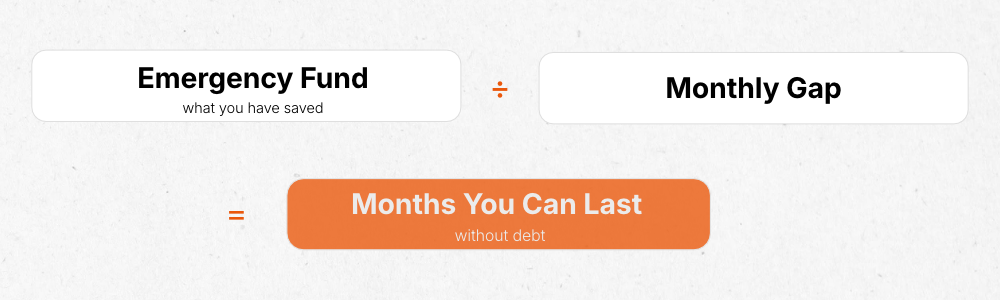
Here’s a simple calculation to estimate how long your fund could cover that gap:
Example:
Let’s meet Emma. She lost her job. Her benefits bring in €1,800 a month. After trimming her Wants, her monthly expenses are €2,900. Her gap is €1,100. She has €9,000 saved, so €9,000 ÷ €1,100 ≈ 8 months.
Now Emma has a clearer picture of her situation. She knows approximately how much time her savings could give her, assuming nothing else changes.
Try the calculation with your own numbers. If your savings won’t cover the gap for as long as you’d hoped, that’s useful information, too. It helps you see where you may need to reduce expenses further, look for additional income, or explore available support.
Step 3: Prioritize savings
Now look at your savings goals. Keep only your most important ones and pause the rest.
Depending on your circumstances, you might temporarily pause:
✂️ Investments
✂️ Celebrations
✂️ Vacations
✂️ Extra mortgage payments
✂️ Personal spending money
✂️ Contributions to the Emergency Fund itself (you’re drawing from it now, so adding to it would just be moving money in a circle 😄)
♻️ If there’s any money left at the end of the month, send it straight back to the Emergency Fund.
Example:
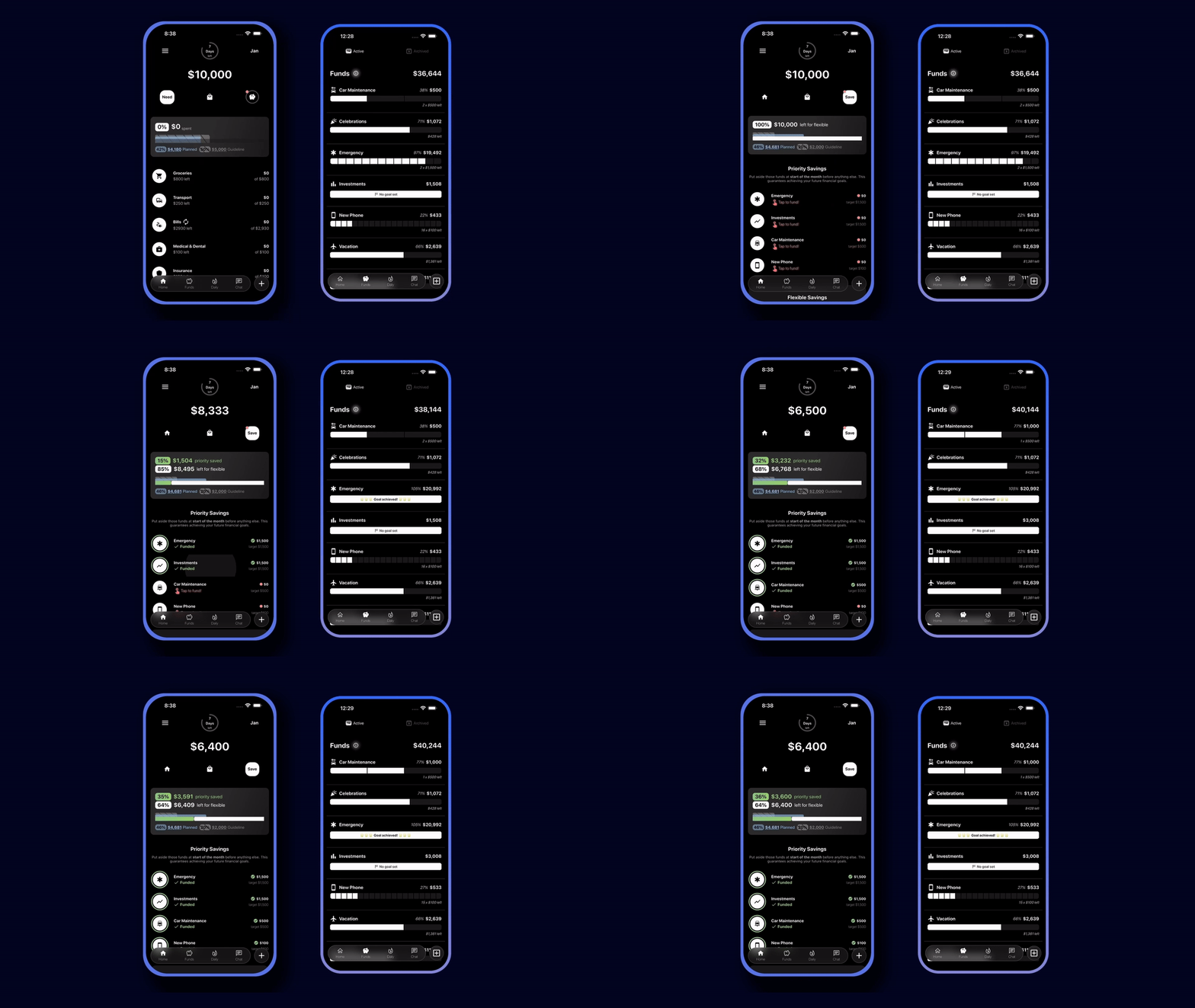
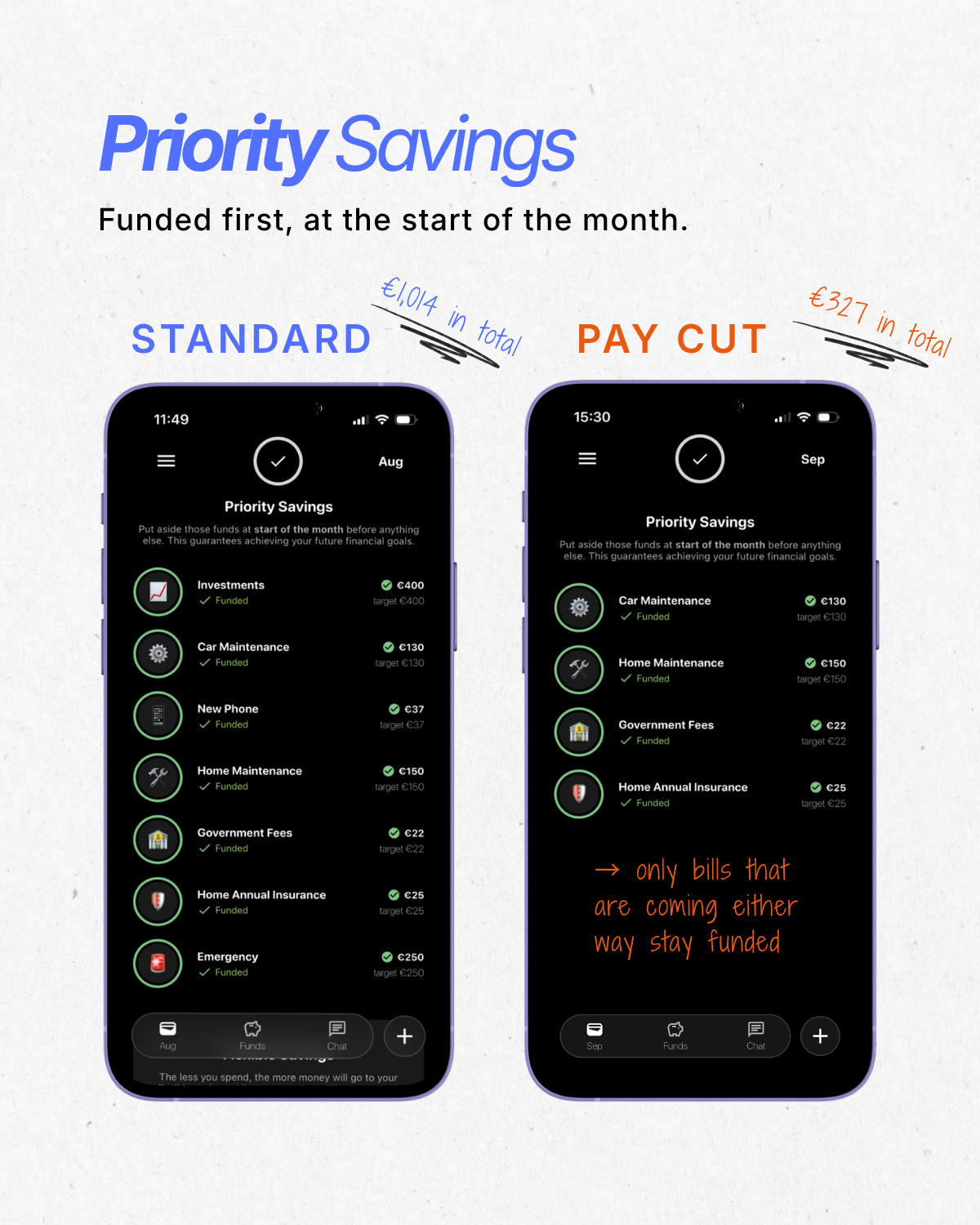
Here’s how Emma’s savings looked before and during a job loss:
🔒 What stays: the bills that are coming either way and can’t be skipped, like car and home maintenance, government fees, and insurance.
✂️ What’s paused: investments, her New Phone Fund, celebrations, extra mortgage payments, personal money, and Emergency Fund contributions.Emma’s New Phone Fund is money she sets aside each month so she can replace her phone without having to cover the entire cost at once. For now, she decides that this goal can wait.
By pausing these contributions, Emma frees up money to help cover her monthly shortfall. She can return to those goals when her circumstances improve.
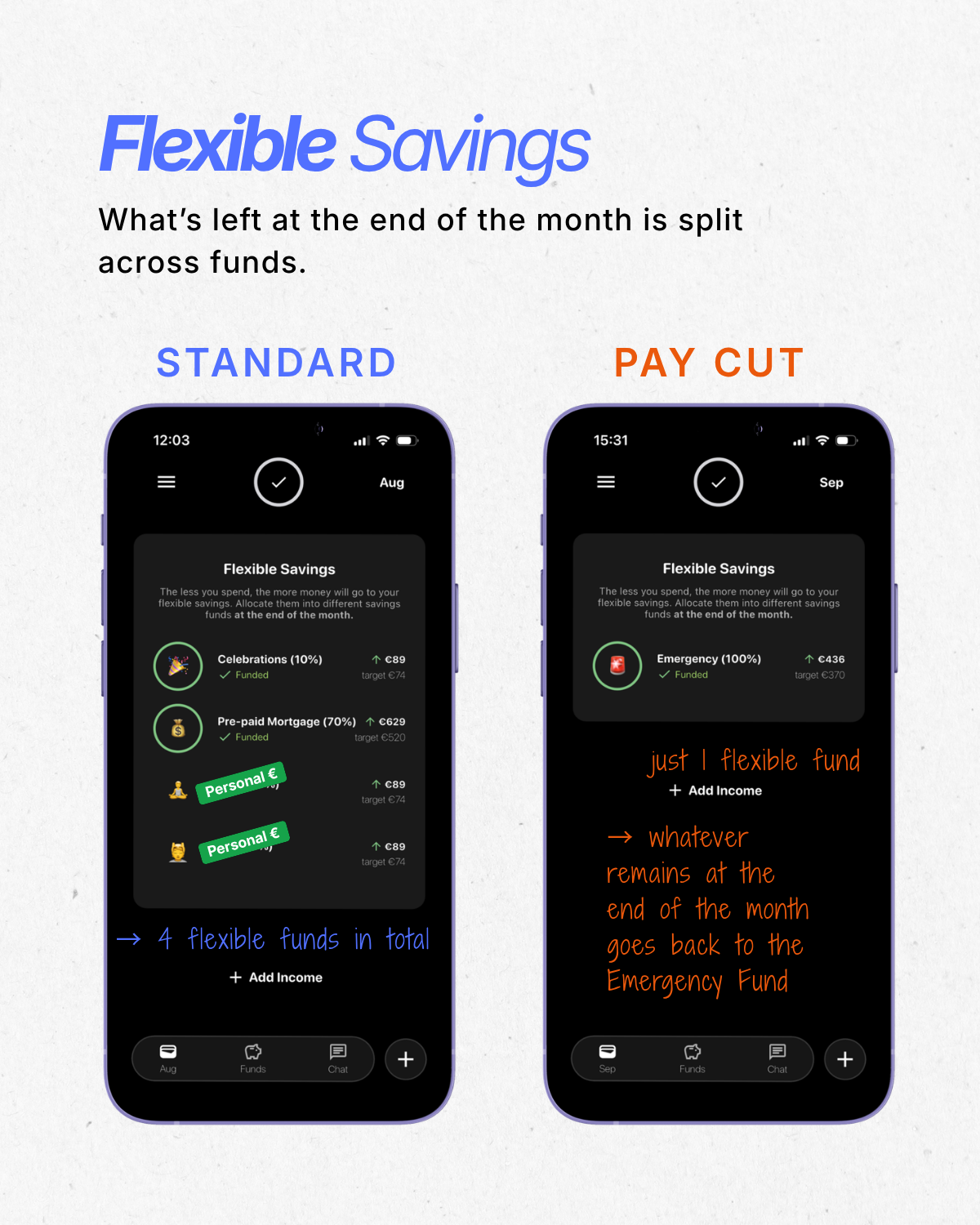
Your priorities can look different during a job-loss period. That is okay. The important thing is to understand which expenses you need to cover, which goals can wait, and how your decisions affect the money available each month. The goal is to protect your household finances until your income recovers.
And when things return to normal
You don’t have to bring everything back at once. Give your budget time to recover, too.
If you’ve used your Emergency Fund to cover the gap, rebuilding it is a good place to start. However, if you have high-interest debt or other urgent financial obligations, you may need to prioritize those first.
Here are three priorities to consider as you get back on track:
1st → Refill the Emergency Fund. If you’ve used it to cover your expenses, start rebuilding it so it’s there when you need it again.
2nd → Restore the Saving Goals. Review your priorities and start funding them again, one by one.
3rd → Bring back the Wants in your monthly planning. The fun stuff returns last, and it’ll feel good.
One last thing.
In a period when income drops, you can change the way you use your budget for a while. But also, in such a period, you build important skills that will last. And that helps you feel better prepared for whatever comes next.
Note: If you still feel uncertain about how exactly to build a budget you’ll stick to? Our free 6-day email series walks you through the basics of budgeting, step by step.